
Havens of Harm: Widespread Abuse in U.S. Juvenile Detention and Corrections Facilities, 2015-2026
This report documents clear evidence or credible allegations of recurring or systemic abuse in 247 juvenile detention and correctional facilities across 41 states and the District of Columbia between 2015 and mid-2026.
Related to: Youth Justice, Incarceration

Photograph by Richard Ross, Juvenile In Justice series
Dedication: Known Deaths of Youth in Custody, 2015-2026
At least 27 youth have died while confined in juvenile justice facilities since 2015, 12 of them by suicide.1 It is likely that other deaths have occurred.
This report is dedicated to their memory.
- Alana Richardson, age 17, cause unknown, January 2023. Central Ohio Youth Center (Ohio).
- Alexis Sluder, age 16, methamphetamine overdose, August, 2022. Elbert Shaw Regional Youth Detention Center (Georgia).
- Alleny Carbone, age 15, suicide, June 2018. Manatee Regional Juvenile Detention Center (Florida).
- Alora Fountain, age 16, suicide, March 2017. Ware Youth Center (Louisiana).
- Andre Sheffield, age 14, meningitis, 2015. Brevard Regional Juvenile Detention Center (Florida).
- Bryan Diaz, age 18, fentanyl overdose, May 2023. Barry J. Nidorf Juvenile Hall (California).
- Cedric “CJ” Lofton, age 17, killed by juvenile detention workers, September 2021. Sedgwick County Juvenile Intake and Assessment Center (Kansas).
- Desmond W., age 17, suicide, November 2020. Mecklenburg Jail North (juvenile detention center) (North Carolina).
- Easley Jeffcoat, age 16, suicide, December 2023. Broad River Road Complex (South Carolina).
- Elord Revolte, age 17, killed by youth, August 2015. Miami-Dade Regional Juvenile Detention Center (Florida).
- Gynnya McMillen, age 16, died following being physically restrained by multiple correctional officers, January 2016. Lincoln Village Regional Juvenile Detention Facility (Kentucky).
- Jon Vanderpool, age 17, suicide, August 2017. Muskegon River Youth Home (Michigan).
- Jordan Bachman, age 17, suicide, February 2019. Ware Youth Center (Louisiana).
- Loyce Tucker, age 17, killed by youth as staff allegedly watched, August 2022. Waycross Regional Youth Detention Center (Georgia).
- Madison Johnson, age 15, suicide, September 2023. Southeast Alabama Youth Services (Alabama).
- Madison Totzkay, age 14, suicide, October 2019. Wolverine Secure Treatment Center (Michigan).
- Maricella Chairez, age 16, suicide. Racine County Juvenile Detention Center, December 2017 (Wisconsin).
- Raven Keffer, age 17, denied medical care, November 2018. Newport News Behavioral Health Center (Virginia).
- Romeo Calhoun, age 17, allegedly denied medications, March 2024. St. Charles County Juvenile Justice Center (Missouri).
- Robert Wright, Jr., age 17, delayed medical care, August 2020. Circleville Juvenile Correctional Facility (Ohio).
- Solan Peterson, age 13, suicide, February 2019. Ware Youth Center (Louisiana).
- Zy’kiria Bell, age 17, suicide, May 2024. Lake Academy (Florida).
- Unidentified boy, age 16, fentanyl overdose, November 2024. Platte Valley Youth Services Center (Colorado).
- Unidentified boy, age 17, natural causes, during FY16-17. Broward Youth Treatment Center (Florida).
- Unidentified youth, age 16, following a fight, August 2022. Eastman Youth Development Campus (Georgia).
- Unidentified boy, age undisclosed, suicide, November 2016. Long Creek Youth Development Center (Maine).
- Unidentified youth, age 16, suicide, October 2024. Red Wing Juvenile Detention Center (Minnesota).
Executive Summary
The long-standing epidemic of maltreatment and abuse inside our nation’s juvenile detention centers and correctional institutions has persisted or even worsened in recent years.2 This rigorous first-of-its-kind national review of both detention and correctional facilities at the state and local levels finds clear evidence or credible allegations of systemic or recurring abuse in 247 juvenile justice facilities across 41 states and the District of Columbia from 2015 through the middle of 2026.3 Evidence found in investigative reports, court records, and news coverage indicates that many youth in these facilities – most of them youth of color, many of them with histories of trauma and mental health disorders – have been subjected to physical abuse by staff, violence from other residents, sexual abuse, excessive use of solitary confinement or mechanical restraints, and other shockingly unsafe or inhumane conditions.
Background: Youth Incarceration Persists, Despite a History of Failure and Abuse
Between 2000 and 2020, the United States achieved “a quiet triumph” in youth justice, drastically reducing both youth incarceration and youth crime rates.4 Since then, this progress has stalled,5 and several states have enacted policies designed to incarcerate more youth.6
The recent policy shifts to increase youth confinement contradict research showing that confinement 1) disrupts the natural maturation process through which most youth age out of delinquent behavior and 2) re-triggers trauma that many incarcerated youth suffered earlier in childhood.7 As a result, incarceration increases the likelihood of reoffending and future incarceration while damaging young people’s future success in education and employment.8 Effective community-based alternative programs and system reforms yield better results, providing opportunities for youth justice systems to safely reduce confinement.9
This report focuses on an additional (and connected) reason to minimize confinement: Incarceration exposes youth to an intolerable risk of abuse. Egregious maltreatment and inhumane conditions have been commonplace in juvenile confinement facilities for more than a century and remain widespread today.10
Findings: Abuses Remain Widespread and Appalling
Among the 247 facilities nationwide found to be abusive since 2015, 116 are detention facilities (which generally hold youth accused of crimes), 120 are correctional placement facilities (which hold youth convicted in juvenile court), eight facilities operate as both a juvenile detention and placement facility, and three are correctional facilities housing youth who were convicted as if they were adults. In each of these 247 facilities, The Sentencing Project has found clear evidence or credible allegations of recurring or systemic abuses, meaning that multiple youth have been subjected to harm. In most of these facilities, multiple types of maltreatment have been noted.
- Physical abuse by staff has been identified in 84 facilities. In many cases, undertrained or poorly supervised staff responded to noncompliance or verbal provocation with unnecessary or excessive force. For example, federal investigators at South Carolina’s Broad River Road Complex in 2022 confirmed incidents including staff choking a youth, breaking a teenager’s arm, and biting a girl’s face.12 In Texas, a federal investigation described staff slamming a handcuffed youth’s head into a brick pillar, knocking him unconscious.13
- Youth-on-youth violence has been identified in 79 facilities, often linked to inadequate staffing or a punitive institutional climate. In the most troubling cases, staff pressured or bribed youth residents to attack other youth or arranged fights for their own entertainment. In Ohio, severe staff shortages were cited as contributing factors to 226 youth assaults in the first five months of 2023 alone.14 In 2023, a 16-year-old boy at Los Angeles County’s Los Padrinos Juvenile Hall detention facility was punched, kicked, and stomped on by at least six other teens. Rather than intervene to protect this youth, staff were seen “exchanging high-fives and handshakes with the attackers.”15
- Sexual abuse has been identified in 80 facilities. In many cases, staff cultivated relationships by providing youth with gifts, drugs, or attention before engaging in or coercing sexual contact. At the Tulsa County (Oklahoma) Family Center for Juvenile Justice, 21 youth were allegedly sexually abused by three staff members in 2023 and 2024.16 A recent New Hampshire lawsuit included allegations that one youth at the state’s Youth Development Center was anally raped or forced to perform oral sex on a staff member at least once per week in 2019 and 2020, just one of 425 former residents who said staff raped them since the 1960s. In other cases, staff failed to protect youth from assaults by peers.17
- Dangerous or excessive use of restraints has been identified in 71 facilities. At San Diego’s East Mesa Juvenile Detention Facility, youth were handcuffed 782 times in 2023 and placed in leg or ankle chains 703 times.18 While 36 states ban the use of pepper spray in juvenile facilities,19 staff at the Middle Tennessee Juvenile Detention Center reportedly pepper-sprayed youth an average of 48 times per month in 2021.20
- Abusive solitary confinement was identified in 131 facilities. This count includes only facilities where youth were regularly confined for more than 24 hours or held in their cells for 20 or more hours per day over multiple days. Nebraska recorded nearly 127,000 hours of isolation across eight state facilities in a single year.21 In New York, children as young as 12 were allegedly held in isolation for weeks or months at a time.22 Solitary confinement can cause permanent psychological damage to adolescents and is highly correlated with suicide.23
- Other unsafe or inhumane conditions were identified in 75 facilities, including rampant availability of drugs (including fentanyl) leading to overdoses; overflowing toilets, mold, vermin, and other shockingly unhygienic conditions; extreme temperatures; and rotten or insufficient food. In several cases, staff failed to monitor suicidal youth, leading to tragic deaths.
Because The Sentencing Project has employed conservative protocols to identify abusive facilities, counting only facilities where credible reports documented repeated abuses, or where youth died in custody—and because many abuses go unreported—these figures substantially undercount the number of facilities where justice-involved youth have suffered maltreatment. Nonetheless, taken together the 247 facilities represent a significant share of detention and correctional facilities nationwide where youth are confined. As of 2022, the most recent figures available, roughly 825 detention and correctional facilities were operating across the U.S.24
Why Abuse Persists
Two structural factors help explain the persistence of maltreatment. First are the problematic dynamics faced by all closed residential institutions – nursing homes, orphanages, psychiatric hospitals, etc. – where residents are isolated from public view and wholly dependent on staff.25 Preventing maltreatment is especially difficult when the population consists of behaviorally troubled and often traumatized adolescents.26 Second is an ongoing staffing crisis. In a recent study, 90% of juvenile corrections agencies nationwide reported challenges hiring and retaining front-line facility staff.27
Recommendations
The evidence in this report makes clear that our nation’s juvenile justice systems are incapable of consistently safeguarding the well-being of confined youth. To end this injustice, improve youth outcomes, and enhance public safety, state and local justice systems must:
- End confinement, except in rare cases. Given the intolerable risk of abuse whenever a young person is confined, youth justice systems should explore every alternative and make every effort to supervise youth safely in the community. Courts, corrections agencies, and legislatures should reject proposals to mandate detention based on the offense. Instead, youth should only be confined if they pose an imminent risk of violence based on a racially and ethnically unbiased validated risk assessment. Youth justice systems should invest in evidence-based alternatives to incarceration and prohibit confinement for status offenses, technical violations of probation, and misdemeanor offenses.
- Prohibit abusive practices. Every jurisdiction should ban solitary confinement in juvenile facilities, prohibit pepper spray and torturous restraint devices, and tightly regulate the use of physical restraints.
- Increase transparency and accountability. States should require comprehensive video surveillance; establish safe and accessible reporting channels for confined youth to report abuse; empower independent monitors to conduct and publish regular facility assessments; and mandate public reporting of key safety indicators including restraint use, isolation incidents, and assaults. Facility staff who abuse young people should be removed from their jobs and prosecuted, as should supervisors and administrators who condone or turn a blind eye to recurring abuses.
Following these recommendations and reducing abuse in juvenile facilities is more than simply a matter of decency. It is also essential as a matter of public safety; confining young people in dangerous environments and subjecting them to abuse increases their likelihood of reoffending28 and makes all of us less safe.29
States Known to Have Abusive Facilities, 2015-2026
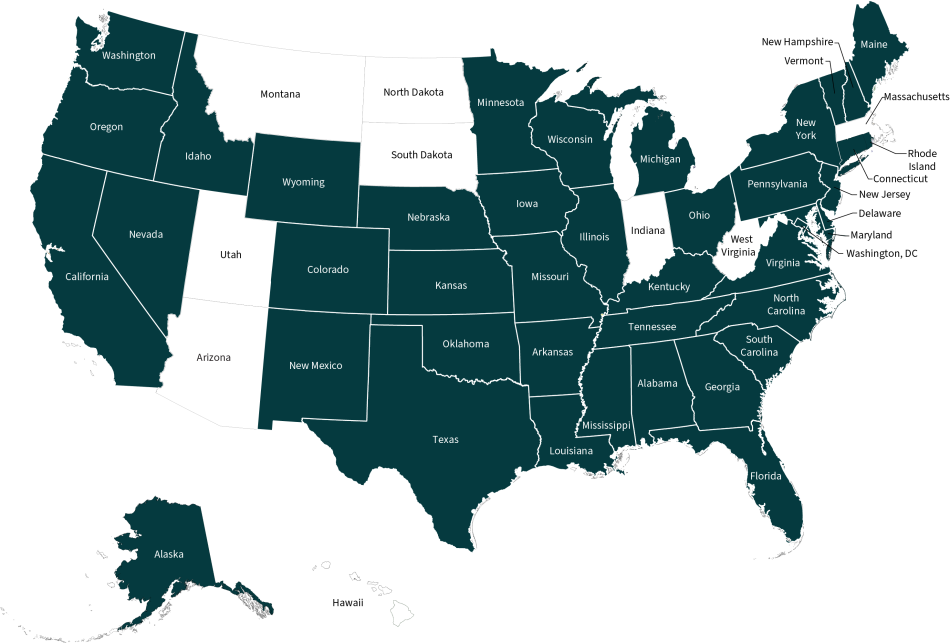
Introduction
The long-standing epidemic of maltreatment and abuse inside our nation’s juvenile detention centers and correctional institutions has persisted or even worsened in recent years.30
This rigorous review of investigative reports, court cases, and news coverage finds convincing evidence or credible allegations of systemic or recurring abuse in 247 youth facilities in 41 states and the District of Columbia from the beginning of 2015 through mid-2026.31 In these facilities, youth – most of them youth of color, many of them with histories of trauma and mental health disturbances – have been subjected to repeated instances of physical abuse by staff, violent attacks by other youth, sexual abuse, excessive use of solitary confinement or mechanical restraints, or other shockingly unsafe or unsanitary conditions. Children have been killed by facility staff. Others, due to staff neglect, have been allowed to die by suicide.
As detailed throughout this report, the stories are gut-wrenching and appallingly commonplace.
- Young people having their heads smashed, bones broken, or throats choked by staff or subjected to unnecessary or dangerous restraints.
- Youth living in correctional units where physical fights are an everyday occurrence and where staff turn a blind eye to—or sometimes encourage —brutal youth-on-youth violence.
- Youth being sexually abused—sometimes physically forced into sexual acts, or coerced to participate in sex acts with facility staff—other times groomed or bribed into sexual liaisons with staff—and at times experiencing sexual abuse by other youth without protection from facility staff.
- Youth being locked in solitary confinement, often for days or weeks—a practice widely condemned as torture, which causes lasting psychological damage, especially for young people.
- Youth being subjected unnecessarily to mechanical and chemical restraints, such as being shackled in chains, bound in restrictive restraint chairs, or having pepper spray shot into their faces.
However alarming, the recent evidence of widespread maltreatment inside juvenile justice facilities should not surprise us. Abuse scandals have been a regular occurrence in juvenile justice facilities for as long as these facilities have existed.32
Not every facility is abusive. In some, well-intentioned and properly trained staff offer constructive rehabilitative programming in a safe and therapeutic environment. And in most facilities, youth benefit from at least some caring staff and positive activities. Yet, the persistent drumbeat of abuses behind the locked doors and razor-wired fences of so many facilities leaves no doubt that our nation’s youth justice systems are incapable of preventing serious and widespread maltreatment.
Combined with compelling evidence showing that incarceration increases recidivism, worsens young people’s health, and reduces their long-term success,33 the widespread maltreatment uncovered in this report underscores the urgent need for reform. Policymakers and practitioners must do everything in their power to end youth confinement, except in rare cases where youth pose an imminent risk for violence. States must prohibit abusive practices, carefully monitor conditions, and promptly expose and punish abuses whenever and wherever they occur.
Florida Department of Juvenile Justice – Brutal Restraints by Facility Staff
A 2017 investigative series by the Miami Herald reported that state files “are filled with stories of juveniles needlessly — sometimes brutally – restrained” by staff:
[Y]ouths held in Florida lockups and residential programs have sustained every conceivable injury: broken arms, shoulders, wrist, necks, legs, ankles, noses and eye sockets; concussions and other traumatic brain injuries; sprains, bruises, cuts, gashes and black eyes… Some of the most dangerous kinds of takedowns — headlocks, chokings and full-body restraints — also have become among the most common, records show. Bad judgment has bordered on the bizarre: One worker who felt insulted summoned her husband, who went on a stabbing spree, gashing both a staffer and the offending youth — twice. Another was terminated after he fired a nail gun at detained teens. Still another flung a plastic lawn chair into the face of an eighth-grader with special needs — who was in a wheelchair — and then punched the boy repeatedly, after a tiff over television time.34
Youth Incarceration on the Rebound, Despite a History of Failure and Abuse
From 2000 through 2020, our nation achieved “a quiet triumph” in youth justice – drastically reducing both the number of youth incarcerated and the incidence of serious youth crime.35 The daily population of youth confined in juvenile facilities plummeted during these 20 years from 109,000 to 25,000.36 This massive drop in youth incarceration did not lead to more youth violence; in fact, quite the opposite. During this period, the youth arrest rate for serious violent crimes fell by two-thirds,37 and the rate at which Americans reported being victims of youth violence fell even more.38
Despite this remarkable success, the population of youth confined in juvenile facilities has begun to rise once again, growing by 17% from 2020 to 2023.39 Increasingly across the nation we see new laws, legislative proposals, and political rhetoric supporting greater use of youth confinement, fueled by a wave of alarmist news coverage about youth crime and violence40 that is unsupported by actual data.41 While some categories of violent offending did rise among youth from 2020 to 2023 after reaching all-time lows early in the pandemic, youth violence has since fallen again, and it currently stands below pre-pandemic levels nationwide.42
Nonetheless, since 2022, several states have enacted policies designed to increase incarceration for youth. New Mexico’s governor issued an order mandating detention for every young person arrested for gun possession, even if they weren’t using the gun to commit a crime.43 Kentucky approved a new law mandating detention for youth accused of some felonies, regardless of their arrest history or the circumstances of their case.44 Colorado,45 Georgia,46 Maryland,47 Nebraska,48 North Carolina,49 and Kansas50 also passed laws aimed at incarcerating more youth.
These policy shifts to increase youth confinement contradict powerful evidence. As The Sentencing Project has documented, incarceration is unnecessary and ineffective for the large majority of youth who enter the justice system. For youth who are confined, incarceration typically increases the likelihood of reoffending and future incarceration and it damages young people’s future success in education and employment.51 That is because incarceration disrupts the natural maturation process that allows most youth to age out of delinquent conduct as they enter adulthood,52 and it triggers trauma that many incarcerated youth suffered earlier in childhood.53 Incarceration is also exorbitantly expensive.54 Effective alternative programs and policy strategies are available to reduce confinement.55
Youth Incarceration: Not Just Ineffective, But Also Abusive
Beyond the poor results of incarceration, this report focuses on another important (and connected) reason to minimize the number of young people in juvenile facilities: incarceration exposes youth to an intolerable risk of abuse. Indeed, egregious abuses and inhumane conditions have been commonplace for as long as courts in our nation have been confining young people in correctional institutions. Facilities in Cheltenham, Maryland,56 and Mariana, Florida,57 contain dozens of unmarked graves for youth who died in captivity through the early part of the twentieth century.58 Ever since, a steady stream of horrific abuses has been revealed in scores of facilities, decade after decade, in every part of our nation. In a 2015 report, the Annie E. Casey Foundation documented systemic or recurring maltreatment – violence by staff or other youth, sexual assaults and/or excessive use of isolation or restraints – in the state-funded youth correctional facilities of 43 states and the District of Columbia since 1970, including 29 states where recurring or systemic abuses occurred from 2000–2014.59
This report updates and expands upon the Annie E. Casey Foundation’s 2015 study by examining abuse in detention centers (which house youth whose charges are pending) as well as state-funded correctional institutions, and by including local as well as state-funded facilities. A companion document to this report lists all facilities where systemic or recurring abuses have been identified, along with a breakdown of the type (or types) of maltreatment seen in each facility and sources documenting each type of abuse.60
Not all facilities are abusive. Youth corrections experts have learned important lessons over the years about how to operate facilities safely; some facilities do maintain safety and provide effective rehabilitative care. In fact, at least one state (Missouri) provided high quality rehabilitative care to incarcerated youth across a network of correctional facilities over an extended period.61 But safe and therapeutic facilities are not the norm.
Rather, history shows that, at any given time, a substantial number of juvenile facilities across all regions of our country inflict grave abuses on confined youth. The 247 facilities identified in this report represent a significant portion of the roughly 825 detention and corrections facilities now operating nationwide.62 Abuses occur across all regions, in states led by both major political parties, in large facilities and small ones, in cities, suburbs, and small towns. Establishing and sustaining the safeguards necessary to prevent facilities from sliding into abuse has been a losing struggle. In many states (including Arkansas, California, Colorado, Florida, Illinois, Louisiana, Maryland, New Hampshire, New York, Oregon, Pennsylvania, Texas, and Washington),63 sickening juvenile facility abuse scandals have recurred in recent decades, sometimes repeatedly, foiling all attempts at reform.
Simply put, consistently preventing widespread abuses has proved beyond the capacity of U.S. youth justice systems.
New Hampshire Youth Development Center: Thousands of Victims
More than 2,200 formerly detained youth at New Hampshire’s Youth Development Center (YDC) have filed suit over abuse taking place over more than 50 years.64 Among the claims are 425 people who said they had been raped by YDC staff; 248 said they had been punched by YDC staff; 200 who said they had been choked or strangled by staff; 576 who said they had been subjected to unnecessary and invasive strip searches; 556 who said they had been held in painful restraints without reason; and 209 who said they had been denied access to the bathroom for so long they had to urinate or defecate in their cells.65
Though the abuses span several decades, dozens occurred between 2015 and 2020.
-
- Plaintiff 701 reported that he was anally raped or forced to perform oral sex on a staff member at least once per week in 2019 and 2020.66 Plaintiff 942 was allegedly forced to engage in mutual masturbation, mutual oral sex, and/or sexual intercourse with a staff member on 25 to 30 occasions over a period of 18 months ending in 2019. The lawsuit also alleged that this youth was subjected repeatedly to strip searches without reason and that he was repeatedly locked in solitary confinement, sometimes for more than one month at a time.67
- In 2017, after a youth confided to a student intern at the facility that he had been sexually abused by a staff member, the intern recorded the allegations in handwritten notes, entered the information in a facility database, and told her supervisor. Soon after, the intern was told by her superior to destroy her notes, and the superior deleted the intern’s entry from the database. Only because the intern disregarded the order and went to the police, this staff member – also named as an abuser by several other plaintiffs – was later arrested and convicted of child sexual abuse.68
Abusive Facilities Not Only Harm Youth, But Also Undermine Public Safety
Combating abuse in juvenile facilities is not only a matter of decency. It is also essential as a matter of public safety. Virtually all confined youth will return home. Statistically, youth previously in confinement – as well as those at high risk to be confined – are the most likely group in society to commit new crimes and victimize community residents.69 Research shows that reducing reoffending rates among behaviorally troubled youth requires physical and emotional safety and positive relationships.70 Confining young people in dangerous environments, and subjecting them to abuse, increases the likelihood that offending behavior will persist into adulthood.71 It makes all of us less safe.72
Why Is Abuse So Pervasive and Safety So Hard to Achieve in Juvenile Facilities?
More than a century of experience with youth incarceration shows that it is possible to operate a juvenile facility in a safe and therapeutic manner,73 but doing so requires a positive culture in which youth and staff alike share a warm and mutually respectful relationship.74 This positive culture depends on many components, including caring and well-trained staff; low youth-to-staff ratios (and low facility populations to avoid overcrowding); a full schedule that promotes positive youth development and minimizes boredom; appropriate mental health care; minimal use of isolation or restraints; extensive family engagement; and a trauma-informed culture.75 Safety is greatly enhanced by video and audio surveillance to eliminate opportunities for illicit activities and hidden abuses, transparent abuse reporting procedures, independent monitoring, and diligent reporting on key safety indicators like the frequency of fights, assaults, use of isolation, and restraints.
Glen Mills School – Years of Hidden Violence in Pennsylvania.
This large private facility was long considered a national model, a place where many states sent youth for correctional treatment. However, a 2019 exposé in the Philadelphia Inquirer revealed that Glen Mills was a haven for physical abuse – and had been for decades.76 Over the prior five years, “at least 13 Glen Mills staffers have been fired and dozens more have been retrained or reprimanded over assaults on 15 students at the school.”77 The Inquirer also noted that state records “severely underestimate the violence at Glen Mills, which students and counselors described as almost daily… Thirteen current and former students told the Inquirer they did not speak to state investigators about their attacks because they were threatened to keep quiet or physically prevented from reporting them.”78
Unfortunately, history also shows that creating a therapeutic environment endowed with most or all of these components – and sustaining it consistently – is nearly impossible for U.S. juvenile corrections agencies. Why? What underlies the inability of youth justice systems to protect incarcerated young people from abuse? Two factors stand out.
First are the difficult dynamics of so-called “total institutions” – such as nursing homes, orphanages, mental institutions, prisons, or residential treatment centers – where a whole class of individuals is shut off from the wider world, creating an outsized power imbalance between staff and residents.79 Maintaining safety is especially difficult when the institution houses troubled, often traumatized adolescents with a propensity for acting out.80
Second is the deep and persistent staffing challenge facing juvenile correctional systems nationwide. In a 2023 national survey of juvenile corrections agencies, 90% of respondents reported challenges in hiring and retaining front-line facility staff.81 These staffing problems have often been linked to abuse:82 recent instances of maltreatment have been tied to staff shortages in Colorado,83 Kentucky,84 Los Angeles,85 Maryland,86 New York State,87 Washington State,88 and Wisconsin,89 among many other jurisdictions. While staffing challenges seem to have worsened in recent years, difficulties recruiting, training, and retaining staff have been a constant for youth correctional agencies for generations.90 Moreover, there is no guarantee that improved staffing will enhance safety for confined youth.91
Even when fully staffed, a total institution for delinquent youth provides a ripe atmosphere for abuse. The gravitational pull toward abuse is powerful and persistent, making it nearly impossible for youth justice systems to consistently maintain a safe and positive climate in juvenile facilities.
Prevalence of Abuse in Juvenile Facilities, 2015-2026
The Sentencing Project’s analysis identified convincing evidence or credible allegations of systemic or recurring abuses in 247 juvenile justice facilities nationwide since the beginning of 2015. Of these facilities, 116 are juvenile detention facilities, 120 are placement facilities housing already adjudicated youth, eight operate as both a juvenile detention and placement facility, and three house youth who were convicted as if they were adults.
These figures substantially undercount the number of facilities where justice-involved youth have suffered maltreatment. As detailed in the Methodology, The Sentencing Project has employed conservative protocols to identify abusive facilities. We have focused only on limited categories of maltreatment that are extremely dangerous and/or painful; other violations of young people’s rights, such as lack of access to education or mental health treatment, are not included. Within each of the categories we have set a high threshold to declare facilities abusive – including facilities only when multiple instances of abuse have been identified. Also, The Sentencing Project has excluded many residential facilities from our analysis. For the most part, only detention and corrections facilities specifically designed and organized to house youth involved in the delinquency court system are counted – not residential treatment centers and group homes whose residents are mostly outside of the justice system, not adult jails housing youth awaiting trial in adult criminal court, and not adult prisons housing youth convicted in adult criminal courts, or immigration detention facilities.
The other reason why the data in this report substantially undercount the number of abusive facilities is that many abuses never come to light. Often, information about maltreatment is either withheld from public view or never collected or reported in the first place.92 And in some states, data is compiled only at the state level, but not broken down by facility, preventing us from identifying facilities where abuses have been occurring.93
For Staff Too, Juvenile Incarceration Is Dangerous
While this report focuses on the harms frequently suffered by incarcerated youth, facilities are often perilous for staff as well, both physically and emotionally.
Even in the best circumstances, working with behaviorally troubled youth is challenging. This work becomes yet more difficult in facilities with a harsh and punitive atmosphere where feelings of mistrust, resentment, and boredom among confined youth give rise to rebellious, provocative, and sometimes violent behavior toward staff.
In many facilities, youth-on-staff assaults are commonplace, sometimes leading to serious injuries or even death.94 At the Indian River Juvenile Correctional Facility in Ohio, staff were assaulted more than 60 times in the first nine months of 2025, including a teacher who was sent to the emergency room after being attacked by two youths with a hammer.95 Staff were assaulted 183 times in Maryland facilities in 2024,96 and 216 times in Colorado facilities in 2025.97
Burnout is also an ever-present danger for staff. A 2023 survey of juvenile justice personnel nationwide conducted by the Council of State Governments found that facility staff “reported feeling ‘like they are incarcerated’ along with youth, given poor working conditions, stress of the job, fears for their safety, rigid working hours, and the isolated location of many facilities.”98
What Types of Abuse Have Been Identified?
In most of the 247 facilities identified as abusive, multiple types of maltreatment have been revealed. Specifically, in only 105 of these facilities has convincing evidence or credible allegations been found for only one type of maltreatment, whereas 66 facilities have been identified with two types of maltreatment, 45 have seen three types, and 31 facilities have seen four or more types of maltreatment.
Physical abuse by facility staff. The Sentencing Project counted a facility as abusive in this category when credible reports showed that staff have either assaulted youth or employed excessive or unjustified force while physically restraining youth. This type of abuse has been identified in 84 facilities from 2015 to mid-2026. In many cases, undertrained or undisciplined facility staff violently restrained youth who refused to comply with their instructions or taunted them, rather than seeking to de-escalate tensions verbally. In other situations, while physically restraining youth, staff applied excessive force or employed dangerous restraint techniques.
At South Carolina’s large youth prison, the Broad River Road Complex, a 2022 federal investigation:
… confirmed abuses such as choking a boy and slamming him against the wall while he was in restraints, forcing a boy to the ground and putting body weight on him in retaliation for his disrespectful comments, hitting a teenage girl in the face, placing a boy in a chokehold in response to the boy reaching for a teacher’s book, dragging a boy by handcuffs to move him, twisting and breaking a boy’s arm, and biting a girl’s face.99
In Texas, federal investigators described incidents where correctional staff lifted up a boy and slammed him to the floor, causing a concussion; slammed a handcuffed boy’s head into a brick pillar, knocking him unconscious; and punched a boy repeatedly in the head, face, and body and then slammed him to the floor while handcuffed.100
In some facilities, staff employ brutality routinely or without justification. Before the facility’s closure in 2024,101 a supervisor at Alabama’s Camp SAYLA allegedly beat youth with a broomstick, whipped them with electrical cords, and pummeled them with a sock stuffed with potatoes.102 At the Milwaukee County Juvenile Detention Center, a juvenile correctional officer was caught on videotape in 2016 slamming a chair into the back of one resident’s head and later unleashing a flurry of violence at the youth.103 A county supervisor later described part of the attack as “completely unprovoked.”104
Wilder Youth Development Center – Shocking Abuses in Tennessee.
In a 2023 report, Disability Rights Tennessee and the Youth Law Center documented terrible conditions and egregious abuses at Wilder Youth Development Center, including physical abuse by staff, sexual abuse, staff organizing and condoning youth-on-youth violence, and rampant use of seclusion in disgustingly unhygienic cells, leading to frequent suicide attempts.105 The report described the experience of a 13-year-old boy, Elijah, who, after refusing to join a gang, “was assaulted multiple times in the presence of staff. Elijah was then placed in solitary confinement for 23 hours a day, where he lived in a cell that smelled like urine, and was infested with roaches, spiders, lizards, and mold.”106
Violence from other youth. Credible reports have found that youth were repeatedly assaulted or injured by other youth in 79 facilities from 2015 through mid-2026. In Ohio’s youth corrections facilities, a surge in youth violence was linked to severe staff shortages.107 In the first five months of 2023, 226 youth were assaulted, 19 of whom required emergency room care.108 In the first half of 2024, two large state facilities with a combined population of fewer than 300 youth – the Indian River and Circleville Correctional Centers – saw 299 assaults, 140 fights, and 43 cases of sexual misconduct.109
Maryland’s Victor Cullen Center,110 where the state’s Juvenile Justice Monitoring Unit111 has repeatedly cited an “adversarial,” “conflictual,” and “compliance-driven” atmosphere,112 has also been plagued for years with frequent fighting and assaults among youth.113 In 2024, for instance, with an average daily population of 25 youth, the Victor Cullen facility saw 45 youth-on-youth fights and assaults.114
In several facilities, staff have pressured or bribed one or more youth residents to attack other youth, or arranged fights for their own entertainment. In December 2023, a 16-year-old boy was punched, kicked, and stomped on by at least six other teens at the Los Padrinos Juvenile Hall detention facility in Los Angeles County.115 Rather than intervene to protect this youth, staff were seen “exchanging high-fives and handshakes with the attackers.”116 The boy, who later sued Los Angeles County and received a $2.7 million settlement, “did not get medical attention after the beating, nor did [staff] notify his parents,” the boy’s attorney said. “Instead, they let him sit there with his nose bleeding into his lunch.”117
At Florida’s Miami-Dade Regional Juvenile Detention Center, a 17-year-old boy died from internal bleeding in 2015 after a dozen other residents ambushed and brutally beat him upon the encouragement of facility staff. The Miami Herald reported that, even before this boy’s death, youth “complained of staff turning them into hired mercenaries, offering honey buns and other rewards to rough up fellow detainees” as a means for workers to exert control without resorting to physical violence themselves.118
Sexual abuse. Facilities were included on the list for sexual abuse when credible reports from 2015 to mid-2026 showed that youth had been forced or lured into sexual contact with staff, or they were forced into nonconsensual sexual contact with other youth residents. Under this definition, which does not include sexual harassment, sexual abuse was identified in 80 juvenile facilities. In many cases, abuses occur after a process of “grooming,” where staff provide youth with attention, sweets, drugs, cell phones, and other gifts to lure them into sexual liaisons. “They gain their trust, they form a relationship, they make the person, the victim, feel special, and in that way, they are able to violate boundaries,” explained one attorney.119
In Oregon, a female counselor at the MacLaren Youth Correctional Facility allegedly groomed numerous boys, providing them with drugs and taking them to private “counseling” sessions where she coerced them into sexual encounters. The counselor allegedly threatened to report one boy for possessing the drugs she had supplied if he refused to have sex with her. When she was caught with another boy, she accused him of rape; surveillance videos proved she was lying.120 Also in Oregon, a male staff member at a girls’ facility allegedly groomed one resident, engaged her in sexual conversations, and then took her several times to an office with no security cameras where he demanded that she perform oral sex.121 At Tulsa’s Family Center for Juvenile Justice, a detention facility, 21 boys and girls reported being sexually abused by three staff members in 2023 and 2024, including one child who was allegedly raped in view of other youth.122
In addition to the many instances of sexual abuse since 2015, a flood of new lawsuits have been filed over past sexual abuse in juvenile facilities, tied to new laws extending statutes of limitations for sexual abuse. The numbers of formerly detained youth joining these lawsuits has been staggering in several jurisdictions, including Los Angeles County (6,800 plaintiffs);123 Illinois (over 900 plaintiffs);124 Maryland (650 plaintiffs);125 Washington State (over 360 plaintiffs);126 and New Jersey (250 cases).127
Dangerous, excessive, or unjustified use of restraints. Facilities were deemed abusive if staff applied mechanical restraints (handcuffs, restraint chairs, leg irons, etc.) or chemical restraints (pepper spray) unnecessarily or in an abusive fashion, or when use of these restraints became routine (with more restraints per year than the facility’s average population). In all, 71 facilities were found to be abusive in this category.
At the Iowa Boys School, staff immobilized boys for hours at a time using a full-body Velcro and canvas restraint device known as “the WRAP,” until a federal judge ordered the facility to stop in 2020, ruling that the facility’s use of this device – which she labeled “torture” – violated the U.S. Constitution’s prohibition on cruel and unusual punishment.128 At San Diego’s East Mesa Detention Facility, youth were handcuffed 782 times in 2023 and placed in leg or ankle chains 703 times.129
Because pepper spray causes extreme pain, its use is banned in juvenile facilities by 36 states and the District of Columbia.130 Yet staff at the Middle Tennessee Juvenile Detention Center reportedly pepper sprayed youth 48 times per month in 2021.131 Pepper spray was also used frequently in many local California facilities, a 2019 investigation found.132 In one California detention center, staff routinely shot pepper spray directly into young people’s faces simply for talking back or banging on the inside of a closed cell door. Afterward, youth were not given decontamination wipes or allowed to wash their faces. Some were so desperate to stop the burning that they submerged their faces in the toilet bowl in their cell.133
Wyoming Boys School – Weeks in Solitary Confinement.
“[M]inors in solitary confinement are locked in … bare rooms for at least twenty-four hours and sometimes for months on end with little to no out-of-cell time,” explained a 2024 lawsuit about conditions at the Wyoming Boys School, a state correctional facility. The lawsuit, which is still pending, alleged and provided evidence indicating that a 16-year-old resident who had been diagnosed with depression, attention deficit hyperactivity disorder, oppositional defiant disorder, impulse control disorder, and conduct disorder was placed in solitary confinement on 30 occasions, including one stay of 30 days and another stay of 45 days. Sometimes, while held confined in an 8×10 foot isolation cell, the boy was allegedly strapped into a restraint chair – unable to move – for up to 12 hours per day. The lawsuit alleged that during the 45-day stay in solitary confinement, the boy became so disturbed that he began breaking lightbulbs, and that five staff members responded by entering the cell in riot gear and tackling the boy to the ground. One “forcefully shoved [the boy’s] face into the glass. While holding [his] face in the shattered glass, the staffer told him, ‘you want to break shit at our facility, this is what you are going to get,’” the lawsuit stated. Another staff member broke the boy’s wrist. When the boy’s arm began to swell and he complained to staff, they allegedly provided him with only a bandage and an over-the-counter pain reliever. A doctor saw the boy and diagnosed the fracture only after a whistleblower complaint was filed. Even after breaking his wrist, staff allegedly continued to bind him in the restraint chair.134
Excessive use of extended periods of solitary confinement. For this study, The Sentencing Project defines solitary confinement as excessive if, on a regular basis, a facility isolated youth alone in a cell for periods longer than 24 hours or confined youth for 20 hours or more per day for multiple days. In all, 131 facilities exceeded these thresholds from 2015 to mid 2026.
This widespread use of solitary confinement is alarming given how harmful it is to young people’s well-being and healthy development. Many prominent organizations – including the American Medical Association,135 the American Psychiatric Association,136 and the American Academy of Child and Adolescent Psychiatry137– have condemned the use of solitary confinement for adolescents. Thirty-seven states have rules limiting the use of solitary confinement,138 and the federal government has banned solitary confinement as a punishment for youth in federal custody.139
The Council of Juvenile Justice Administrators (CJJA), an association of states’ youth corrections agency heads, reviewed the compelling research on the harms of solitary confinement for youth and concluded that “subjecting developing adolescents to isolation can cause permanent psychological damage and multiple studies suggest it is highly correlated with suicide.”140 In addition, CJJA found “facilities that minimally use isolation are more safe – fewer injuries to youths and staff, less suicidal behavior and overall violence – and healthier staff-youth relationships that lead to less recidivism.”141
Yet many facilities nationwide – sometimes entire systems – have continued to make pervasive use of solitary confinement, often isolating youth for days or weeks at a time. Lawsuits in New York State allege that “children as young as 12 are regularly held in small, barren rooms for weeks and months on end across five facilities,” the New York Times reported in 2026, “and are forced to go to the bathroom in trash cans in their cells and then eat meals there.”142 Florida detention centers placed youth in isolation more than 60,000 times from 2015 through 2020, typically for more than 24 hours in many facilities.143 Nebraska saw nearly 8,500 uses of isolation in eight state facilities in FY 2024-25 – for a total of 127,000 hours.144
In some cases, youth in solitary confinement have faced horrific conditions. At the Iowa Boys School, for instance, youth were “routinely forced into isolation for weeks at a time in filthy cells that smelled like urine and had nothing but a sink, toilet and a raised concrete platform to sleep.”145 Among the youth who have lost their lives in custody since 2015, several died by suicide while being held in solitary confinement as staff failed to monitor their safety. (See “Known Deaths of Youth in Custody, 2015-2026” dedication on p. 4 of this report.)
Other shockingly unhygienic, unsafe, or inhumane conditions. In 75 facilities, The Sentencing Project identified one or more additional types of maltreatment. These included:
- Rampant availability of drugs. In 2023, months after a youth overdosed on fentanyl at Washington State’s Green Hill School correctional facility, a search uncovered a stash of drugs including more fentanyl as well as methamphetamine.146 In Colorado, nine youth overdosed at the Grand Mesa youth facility in 2024–25,147 and following an overdose at Colorado’s Spring Creek facility, drug tests reportedly showed that 20 of 48 residents tested positive for fentanyl.148
- Unhygienic conditions. In North Carolina, prior to its closure in 2025, the Madison County Juvenile Detention Center punished youth by placing them in a “detox” cell that had no windows, no bed, no blankets or pillows, and only a hole in the floor for urination and defecation, according to Disability Rights North Carolina.149 In Pennsylvania, a 2022 grand jury report found that the Delaware County Juvenile Detention Center was “filthy, with mold and mildew throughout,” infested with bugs and rodents, and beset with frequent flooding from sinks and toilets.150
- Exposure to heat or freezing temperatures. Delaware County’s detention center also lacked adequate heating: A grand jury found in winter months youth reported that they could see their own breath.151 Heating failures also beset the Youth Detention Facility in Baltimore City in December 2025, and “children were left freezing.”152 In Louisiana, youth confined at the Angola prison in 2023 sued, alleging they were held in windowless concrete cells without air conditioning, even as the heat index allegedly surpassed 130 degrees.153
- Rotten or insufficient food. In South Carolina, a recent lawsuit alleged that “children often go hungry due to a lack of adequate meals and the unsanitary way in which those meals are served… [F]ood sometimes has cockroaches in it, or it is rancid or contaminated.”154 In Colorado, young people housed at a facility for youth tried as adults reportedly received so little food that many began suffering extreme weight loss.155
- Failure to properly monitor suicidal youth. At Minnesota’s Red Wing facility in 2024, an investigation found staff failed to properly monitor a troubled girl for more than four hours on the day she took her own life.156 At the Ware Youth Center in Louisiana, two boys – one of whom was only 13 years old – died by suicide within a three-day period in 2019. In both cases, staff who were supposed to check on the youths every 15 minutes failed to do so. With the younger boy, staff had not done a check for more than two hours when his body was discovered hanging from a sheet tied around his neck.157
In Residential Treatment Facilities, Too: Widespread Abuse
Not all youth confined by U.S. delinquency courts are sent to detention centers or youth correctional centers. A sizable share – 16% of all youth confined, and 30% of those in committed placements (youth who were already found delinquent and sentenced by a judge)158– are held in residential treatment facilities. Because they work with troubled youth not only from the juvenile justice system but also from child welfare, children’s mental health, or self-referrals by families with struggling teenagers, these operations are generally not counted among the abusive facilities identified in this report unless they mostly served delinquent youth.
However, residential treatment facilities (RTFs) also suffer from widespread abuse. In 2024, a U.S. Senate Finance Committee report found that “children at RTFs suffer harms such as the risk of physical, sexual, and emotional abuse at the hands of staff and peers, improperly executed and overused restraint and seclusion.”159 The report also noted that children in these facilities suffer “routine harm [including] sexual, physical, and emotional abuse [and] unsafe and unsanitary conditions.”160
Among the worst of these abuses in recent years occured at facilities owned by Sequel Child and Family Services, a for-profit chain that operated 35 residential treatment facilities in 16 states as of 2017.161 At Sequel’s Lakeside Academy in Kalamazoo, Michigan, a 16-year-old foster child, Cornelius Frederick, died in 2020 after being held down for 12 minutes by seven staff members after he threw a sandwich.162 Sequel’s Clarinda Academy in Iowa closed in 2021 after a string of reports describing violence, serious injuries, and sexual assaults.163
Today, Sequel no longer operates youth facilities. However, several of its former facilities are operating under the management of a new corporation run by one of Sequel’s original founders.164 Widespread abuses have been identified in residential treatment centers operated by other large chains,165 and in smaller facilities like The Lord’s Ranch in Arkansas, where numerous individuals alleged “premeditated sexual abuse and rape; extreme physical violence resulting in injuries like broken bones; and psychological manipulation, such as isolation closets and straitjackets.”166
“The risk of harm to children in [residential treatment facilities] is endemic,” the U.S. Senate Finance Committee found.167 “The harms children in RTFs experienced are the direct, causal result of an operating model that incentivizes providers to optimize revenues and operating and profit margin.”168
Acadiana, Ware, and Angola in Louisiana – A Dizzying Array of Maltreatment Incidents.
Horrific abuses have been documented recently at three Louisiana facilities. At the Acadiana Center for Youth, a 2022 Marshall Project story explained:
… teens in this facility, some with serious mental illness, were locked alone in their cells for at least 23 hours a day for weeks on end. They were shackled with handcuffs and leg irons when let out to shower, and given little more than meals slid through slots in their doors. Some teens took those brief moments of human contact to fling their feces and urine at the guards.169
In 2022, a long feature article in the New York Times described terrible abuses at the Ware Youth Center that led to a flurry of suicide attempts and two suicide deaths. Conditions were so dire that at least 91 youth attempted to escape Ware from 2019 to 2022; some young people even expressed a preference to be transferred to an adult prison or a mental institution.170 And when a bed shortage led the state to open a juvenile wing in the notorious Angola prison in 2022, it also led to terrible abuses: A judge ordered the state to remove youth from Angola in 2023 after finding that “prison officials locked the juveniles in cells for days at a time and punished them with the use of handcuffs, pepper spray and denial of family visits.”171
Conclusions and Recommendations
The evidence in this report makes clear that our nation’s juvenile justice systems are incapable of consistently safeguarding the well-being of confined youth. Placing youth into juvenile detention centers and correctional facilities predictably exposes them to substantial risk of brutal, gruesome, and shameful mistreatment. Abuses are pervasive, they are long-standing, and they have proven unstoppable. In light of this stark reality, state and local justice systems must do three things.
1. End Confinement, Except in Rare Cases. Given the intolerable risk of abuse whenever a young person is confined, youth justice systems should explore every alternative and make every effort to avoid incarcerating youth by seeking alternatives to supervise youth safely in the community. Justice systems cannot continue to utilize incarceration as a standard option for youth who break laws. Rather, incarceration must become a rare exception employed only when youth pose an imminent risk of violence based on a validated risk assessment process that ensures racially and ethnically equitable outcomes.
Courts, corrections agencies, and state government leaders must reject the nascent, retrograde movement emerging that seeks to reverse two decades of progress in reducing overreliance on youth incarceration. They must resist the noisy drumbeat calling for a return to the failed policies of the past. The evidence is overwhelming that incarceration increases reoffending, damages young people’s futures, wastes huge amounts of taxpayers’ money, and – as this report shows – it frequently exposes young people to ruthless and inhumane treatment.
Specifically, courts, corrections, agencies and state legislatures must:
- Reject proposals to mandate detention based solely on the charged offense without considering the specific details of the case and the danger posed by the young person as measured by a racially and ethnically unbiased validated risk assessment process.
- Resist proposals to reduce funding for effective alternatives-to-incarceration programs. Rather, states and local justice systems should substantially expand support for alternative programs, which continue to suffer from significant underinvestment.
- Prohibit confinement of youth accused of status offenses, violations of court orders, technical violations of probation, and misdemeanors. Such a policy would follow the lead of California, Florida, Georgia, Hawaii, Illinois, Kentucky, Maryland, Mississippi, South Dakota, Texas, and Utah, states that prohibit state incarceration in all or almost all misdemeanor offense cases.172
2. Prohibit Abusive Practices. Many abuses detailed in this report involve punitive practices that are widely condemned by leading experts but nonetheless remain permitted in some states. History shows that it will never be possible to ensure safety for the small number of youth who pose substantial risk of committing serious crimes and must be confined. But the likelihood of abuse can be significantly reduced if every youth justice system takes action to:
- Prohibit solitary confinement as a punishment and allow isolation only for the brief periods needed if youth temporarily lose their composure – typically 10 to 30 minutes, and never more than four hours.173
- Prohibit the use of pepper spray in juvenile facilities.
- Prohibit the use of torturous mechanical restraint devices such as “the WRAP” and restraint chairs, and allow the use of handcuffs, chains, and similar hardware only in exceptionally dangerous circumstances.
Restrict the use of physical restraints by requiring staff to employ verbal de-escalation techniques first, curtail the circumstances in which staff may restrain youth, and – when restraints are used – carefully regulate the restraint techniques employed by staff to minimize pain and reduce the likelihood of injury.
3. Expose Abuses Whenever They Occur. Many or most instances of maltreatment inside juvenile facilities never reach the public. Youth in closed institutions may be unaware of, or they may be pressured or denied the right to protest abusive treatment, or they may be pressured not to report maltreatment.174 Indeed, many of the abuses described in this report were identified only due to state rules requiring transparency, such as independent facility audits or security cameras installed in facilities. Yet, in too many jurisdictions, independent observers are not permitted to monitor facilities,175 and gaps in security cameras allow incidents to go unrecorded.176 In keeping with the axiom that sunlight is the best disinfectant, every state should enact rules to:
- Ensure that confined youth can freely and safely report abuses to independent monitors who will diligently review their allegations.
- Compile and regularly publish statistics on key safety indicators inside juvenile facilities, including the use of solitary confinement (number and duration of incidents); the use of physical, mechanical, and chemical restraints; and the number of fights, assaults, and serious injuries.
- Mandate comprehensive video and audio surveillance by requiring cameras in all areas of every facility other than bathrooms and showers, leaving no hidden nooks, closets, stairwells, etc.177
- Authorize independent monitors to publish regular monitoring reports and to thoroughly review facility conditions, investigate abuse allegations, and identify systemic problems.
Whenever abuses come to light, systems must diligently remove facility personnel involved in maltreatment from their jobs and prosecute abusers for any crimes they have committed. These measures must be taken against both staff who directly abuse young people and supervisors and administrators who condone, tolerate or turn a blind eye to abuse.
From its very founding, America’s juvenile court system has been grounded in a legal doctrine called parens patriae, which empowers the state to act as a “kind and just parent” to protect the interests of children and effectively address lawbreaking behaviors when parents cannot.
This report leaves no doubt that our justice system is failing to act as a kind or just parent to the youth we incarcerate. To end this injustice, we must significantly reduce the number of young people sent to juvenile facilities. And we must take the steps we can to reduce abuses inside those facilities. The alternative – allowing horrific abuse to remain a predictable and prevalent result for youth involved in the justice system – is unacceptable.
Methodology: How this study was conducted
The Sentencing Project conducted a rigorous internet search for news articles, investigative reports, and lawsuits detailing abuse and maltreatment in juvenile detention and corrections facilities throughout the United States from January 2015 through mid-2026. The investigation also included a review of an unpublished compendium of recent lawsuits provided to The Sentencing Project by the Gault Center.178 For a handful of states, the authors reached out to advocacy organizations for additional insight and information about recent abuse allegations.
What kinds of facilities are included? The report focuses only on facilities that are designed and organized to house youth involved in the justice system. These include juvenile detention centers, where young people are held pending their court dates or while they await transfer to a correctional or treatment program following adjudication, as well as correctional placement facilities operated or funded by states or by local justice systems to provide rehabilitative programming to young people who have been found delinquent in court.
The report excludes most group homes, residential treatment facilities, and psychiatric hospitals where youth are sometimes placed by delinquency courts. Only facilities where serving justice-involved youth is a core focus and where justice-involved youth represent a substantial share of the resident population are included. Likewise, the report does not include adult jails and prisons that may confine youth who have been tried and punished as adults, except if a facility is specifically designed for youth.179 The report also excludes immigration detention centers that hold children.
These facility types are excluded not because they are free of maltreatment, but only to keep the scope of the study manageable. In fact, the United States has seen a wave of troubling abuse revelations in residential treatment programs for adolescents (see p. 20), and also in some immigration detention centers that hold adolescents and younger children.180 Also, substantial research has found that incarcerating youth in adult facilities – which often lack educational programming, mental health treatment, and therapeutic programs – is even more dangerous for youth than confinement in juvenile facilities.181
What types of abuse are included? The report focuses on abuses that threaten young people’s safety and well-being. Specifically, it focuses on six categories of maltreatment:
- physical abuse by staff;
- failure to protect youth from violence at the hands of other residents;
- sexual abuse;
- dangerous, excessive, or unjustified use of restraints;
- excessive use of extended periods of solitary confinement; and
- other shockingly unsafe, unhygienic, or inhumane conditions.
The report does not examine other violations of incarcerated young people’s rights, such as their rights to a quality education, services and accommodations to address disabilities and special needs, adequate mental health and medical care, or freedom to practice their religious beliefs. Rather, the report concerns itself only with abuses that most directly harm young people’s physical and psychological well-being.
How is “systemic or recurring” abuse defined? Except when staff misconduct has resulted in the death of a young person, facilities are not rated as abusive on the basis of any single incident. Rather, facilities are counted as abusive only when at least two clearly abusive incidents (at different times) have been identified (in the case of staff abuse, violence by other youth, sexual abuse, or other inhumane practices or conditions); or when disciplinary practices such as mechanical restraints, pepper spray, and solitary confinement became commonplace or were employed in clearly abusive ways.
What standards have been applied to determine whether a facility is abusive? For each type of maltreatment, the authors have adopted a high threshold. To qualify as abusive, reported incidents must not only violate what experts consider best practice, but the maltreatment must go much further – inflicting clear and substantial damage on young people’s well-being in a way that the authors believe would shock the conscience of the average citizen. Physical abuse by staff is included only if there is a finding that staff used force improperly or caused a significant injury. Likewise, failure to protect youth from peer violence is included only if it results in significant injury. Facilities are included as abusive due to sexual abuse only if two or more incidents of non-consensual sexual contact between youth or sexual contact between youth and staff were reported, or if the facility was among the 12 with the highest rates of reported sexual abuse in a national survey of incarcerated youth conducted by the Bureau of Justice Statistics in 2018.182 Whereas many experts have argued that the use of pepper spray is unnecessary and counterproductive, and 36 states ban its use entirely in juvenile facilities, this report counts pepper spray as abusive only when investigators determined that it was used improperly or unnecessarily, or when its use became routine (with more incidents per year than the facility’s average population). The same standard was applied for the use of mechanical restraints.
Likewise, many experts have argued that any punitive or extended use of solitary confinement for children is abusive.183 However, this report counts isolation as abusive only when a facility regularly confined youth for more than 24 hours isolated in a cell, or when it confined youths for 20 hours or more per day on a regular basis. Facilities are deemed abusive if they exceed these thresholds more times in a year than the facility’s average population, or if they employ isolation in a clearly abusive manner. Finally, facilities are deemed abusive if any of the following other conditions have been identified: failure to properly monitor suicidal youth; widespread availability of fentanyl or other drugs; unhygienic conditions such as lack of toilets or broken plumbing that exposes youth to raw human waste, or uncontrolled vermin; exposure to extreme heat or freezing temperatures; or rotten or insufficient food.
What standard of evidence was used to determine that an abuse has been clearly documented? In this analysis, The Sentencing Project has deemed credible any report of abuse that is determined to be true in a government-sponsored audit or investigative report or data report published either by a government agency or by a reputable advocacy organization (such as a disability rights agency, or the American Civil Liberties Union), or in coverage by a mainstream news organization. The report also includes, but distinguishes, credible allegations included in lawsuits filed on behalf of youth that clearly document specific incidents of abuse and that have not – to the knowledge of The Sentencing Project – been convincingly refuted by responsible authorities.
Appendix: List of abusive facilities and categories of abuse
| 1. | Alana Richardson: Hergesheimer, C. (2023, November 11). Girl found hours after she died in juvenile detention. What happened? Columbus Dispatch; Alexis Sluder: Mangrum, M. B. (2024, July 24). ‘They watched her die:’ Federal lawsuit filed for teen who died at Dalton Detention Center. NewsChannel 9 ABC; Alleny Carbone: De Leon, J., & Marbin Miller, C. (2018, December 5). Girl tried twice to kill herself. They took her off suicide watch. It was a fatal error. Bradenton Herald; Alora Fountain: Shutzer, M., & Mueller, R. L. (2022, October 30). ‘Dying inside’: Chaos and cruelty in Louisiana juvenile detention. The New York Times; Andre Sheffield: Florida Department of Juvenile Justice, Office of the Inspector General. (2015). Florida Department of Juvenile Justice Office of the Inspector General 2015 annual report; Florida Today staff. (2015, February 22). Teen’s death in Brevard jail caused by meningitis. Florida Today; Reutter, D. (2017, March 9). Youths still dying in Florida juvenile detention centers from abuse, neglect. Prison Legal News; Bryan Diaz: Ellis, R., & Queally, J. (2023, October 13). After fatal overdose at L.A. juvenile hall, a mother grieves as drugs remain a threat. Los Angeles Times; Cedric “CJ” Lofton: Hollingsworth, H. (2022, May 13). ‘From crisis to death’: Probing teen’s last, desperate hours. Associated Press; Desmond W.: Oehrli, R. (2025, January 24). Mecklenburg sheriff agrees to pay $550,000 to family of teen who committed suicide in jail. Charlotte Observer; Easley Jeffcoat: Schechter, M. (2023, December 7). 16-year-old teen dies after suicide attempt at SC’s detention facility for juveniles. South Carolina Public Radio. Elord Revolte: CBS Miami (2019, July 23). Florida detention officer acquitted in death of teenage inmate. CBS News Miami; Gynnya McMillen: D’Almeida, K. (2016, April 7). Unanswered questions abound in Gynnya McMillen’s in-custody death. Rewire News Group; Kates, G. (2017, May 24). Gynnya McMillen case: Kentucky to close juvenile detention center where teen died. CBS News; Jon Vanderpool: Usher, K. H. (2018, June 20). Youth home targetted by lawsuit after suicide. Cadillac News; Jordan Bachman: Shutzer, M., & Mueller, R. L. (2022, October 30). ‘Dying inside’: Chaos and cruelty in Louisiana juvenile detention. New York Times; Loyce Tucker: Jones, Z. C. (2022, August 17). Corrections officer arrested after juvenile dies from “fight game” in youth detention center. CBS News; Lewis, T. (2025, October 8). Family speaks out as justice remains delayed in teen’s death at Waycross Youth Detention Center. WALB News 10; Madison Johnson: Curtis, K. (2023, November 20). Mother files suit after her teen daughter commits suicide while in custody. WTVY News; Madison Totzkay: Murdock, R. (2021, September 29). Lawsuit reveals details on teen’s death at Wolverine juvenile facility in Saginaw County. MLive; Maricella Chairez: Linnane, R. (2021, January 13). Maricella’s last breath: She died alone in a cell at 16. Officials said they were devastated. They didn’t say they did anything wrong. Milwaukee Journal Sentinel; Raven Keffer: Horne, C. (2018, November 20). Special report: A teen’s pleas for help… ignored? WAVY; Romeo Calhoun: First Alert 4 Staff, & Andrews, J. (2024, March 7).17-year-old dies in St. Charles County Juvenile Justice Center. KMOV; Robert Wright, Jr.: Bischoff, L. A., Knight, C., & Knapp, A. L. (2024, January 22). Kids behind bars: Chaos, violence and neglect plague youth prisons and detention centers. The Cincinnati Enquirer; Solan Peterson: Shutzer, M., & Mueller, R. L. (2022, October 30). ‘Dying inside’: Chaos and cruelty in Louisiana juvenile detention. The New York Times; Zy’kiria Bell: Muller, B. (2024, July 23). Teen’s death in state care ruled a suicide; family still questioning how it happened. WFLA; Unidentified boy (Colorado): Tabachnick, S. (2024, December 5). Staffer allegedly provided drugs to teen in Greeley youth detention center who later died, report says. Denver Post; Unidentified boy (Florida): Florida Department of Juvenile Justice, Office of the Inspector General. (2017). State of Florida Department of Juvenile Justice Office of the Inspector General 2016-2017 Annual Report; Miller, C. M. (2016, October 13). 17-year-old dies at Pembroke Pines drug treatment center. Miami Herald; Unidentified youth (Georgia): Landergan, K. (2022, September 23). Three die in juvenile custody in Georgia in recent weeks. The Atlanta Journal-Constitution; Unidentified boy (Maine): Sharon, S. (2016, November 11). Transgender teen’s suicide raises concerns about youth corrections center. Maine Public; Unidentified youth (Minnesota): Richardson, C. (2025, March 28). Investigation into teen’s death at juvenile detention facility reveals flaws. Republican Eagle. |
|---|---|
| 2. | For information about past abuses, see: Mendel, R.A. (2015). Maltreatment in Juvenile Correctional Facilities – The Annie E. Casey Foundation. Annie E. Casey Foundation. |
| 3. | See: Methodology at page 24 for more information on the definitions and procedures used to identify abusive facilities. |
| 4. | Foreman, J., Jr. (2025, January 28). What happened when America emptied its youth prisons: Lessons from a radical 20-year experiment and a quiet triumph of public policy. The New York Times Magazine. |
| 5. | The Sentencing Project. (2025, April 7). Black and tribal youth bear the brunt of rising incarceration rates [Press release]. |
| 6. | Lartey, J. (2024, December 21). While youth detention numbers rise, states begin to roll back reforms. The Marshall Project. |
| 7. | Mendel, R. (2022). Why youth incarceration fails: An updated review of the evidence. The Sentencing Project. |
| 8. | Mendel, R. (2022). Why youth incarceration fails: An updated review of the evidence. The Sentencing Project. |
| 9. | Mendel, R. (2023). Effective alternatives to youth incarceration. The Sentencing Project; Mendel, R. (2023). System forms to reduce youth incarceration. The Sentencing Project. |
| 10. | Mettler, K. & Brice-Saddler, M. (2025, September 22). 230 dead Black boys. A ‘secret cemetery.’ Officials knew, and didn’t act. Washington Post; Kimmerle, E. H., Estabrook, R. W., Wells, E. C. & Jackson, A. T. (2012). Documentation of the Boot Hill Cemetery (8JA1860), at the former Arthur G. Dozier School for Boys, Marianna, Florida, Interim Report (Division of Historical Records Permit No. 1112.032). University of South Florida; Mendel, R.A. (2015). Maltreatment of youth in U.S. juvenile corrections facilities. Annie E. Casey Foundation. |
| 11. | Rovner, J., Mendel, R.A., & Lewis, R. (2026). Havens of harm: State-by-state documentation of abuse in youth justice facilities. The Sentencing Project. |
| 12. | U.S. Department of Justice, Civil Rights Division. (2022). Investigation of South Carolina Department of Juvenile Justice’s Broad River Road Complex. |
| 13. | U.S. Department of Justice, Civil Rights Division & U.S. Attorney’s Offices for the Districts of Texas. (2024). Investigation of the Texas Juvenile Justice Department. |
| 14. | Bischoff, L. A., Knight, C. & Knapp, A. L. (2023, November 11). Kids behind bars: Chaos, violence and neglect plague youth prisons and detention centers. Cincinnati Enquirer. |
| 15. | Walker, M. (2025, June 4). L.A. County to pay $2.7 million to teen beaten in juvenile hall ‘gladiator fight’. The New York Times. |
| 16. | Bryan, M. (2024, May 29). Lawsuit alleges widespread abuse, cover-up at Tulsa Juvenile Center. Public Radio Tulsa. McCarty, C. (2024). Heinous allegations: Abuses in youth custody in Tulsa County, Oklahoma. Oklahoma Appleseed. |
| 17. | Moon, J. & Samora, R. (2024, June 6). Failures to act. New Hampshire Public Radio. |
| 18. | This facility had an average daily population of 159 youth. San Diego County Juvenile Justice Commission (2024). San Diego County Juvenile Justice Commission inspection report: East Mesa Juvenile Detention Facility. |
| 19. | Council of Juvenile Correctional Administrators (2011, May). Pepper spray in juvenile facilities [Issue brief]. |
| 20. | Disability Rights Tennessee v. State of Tennessee (M.D. Tenn. filed June 26, 2024) (class action complaint). |
| 21. | Office of Inspector General of Nebraska Child Welfare (n.d.). Juvenile room confinement in Nebraska: Fiscal year 2024-25. Nebraska Legislature. |
| 22. | Meko, H. (2026, January 14). New York punishes 12-year-olds with solitary confinement, lawsuit claims. The New York Times. |
| 23. | Council of Juvenile Correctional Administrators. (2015, March). Council of Juvenile Correctional Administrators toolkit: Reducing the use of isolation [Toolkit]. |
| 24. | This figure excludes residential treatment centers, group homes, and youth shelters where youth in the justice system are sometimes housed. Puzzanchera, C., Hockenberry, S., Sladky, T. J., & Kang, W. (2024). Juvenile residential facility census databook. U.S. Office of Juvenile Justice and Delinquency Prevention. |
| 25. | Goffman, E. (1958). Characteristics of total institutions. In Symposium on preventive and social psychiatry (pp. 43-84). Walter Reed Army Institute of Research. |
| 26. | Pope, K., Luna, B., & Thomas, C. R. (2012). Developmental neuroscience and the courts: How science is influencing the disposition of juvenile offenders. Journal of the American Academy of Child and Adolescent Psychiatry, 51(4), 341-342. |
| 27. | Weber, J., & Gilbert, C. (2023, October). Systems in crisis: Rethinking the juvenile justice workforce and foundational strategies for improving public safety and youth outcomes. The Council of State Governments Justice Center. |
| 28. | National Research Council. (2013). Reforming juvenile justice: A developmental approach. The National Academies Press. |
| 29. | Weber, J., & Gilbert, C. (2023). Systems in crisis: Revamping the juvenile justice workforce and core strategies for improving public safety and youth outcomes. The Council of State Governments Justice Center. |
| 30. | Looking only at state-funded youth corrections facilities, not detention facilities or local correctional facilities, the Annie E. Casey Foundation found systemic or recurring abuses in 29 states plus the District of Columbia from 2000 through 2015; examining a shorter time period (2015 through mid 2026), this report identifies state-funded youth corrections facilities with systemic or recurring abuses in 40 states plus the District of Columbia, including facilities that are combined detention and commitment facilities. Mendel, R.A. (2015). Maltreatment of youth in U.S. juvenile corrections facilities. Annie E. Casey Foundation. |
| 31. | A list of those facilities is included as an appendix to this report. A companion publication details all facilities known to have had abusive conditions between 2015 and 2026: Rovner, J., Mendel, R.A., & Lewis, R. (2026). Havens of harm: State-by-state documentation of abuse in youth justice facilities. The Sentencing Project. |
| 32. | Shelden, R. G. (2005). From houses of refuge to ‘Youth Corrections’: Same story, different Day. Center on Juvenile and Criminal Justice; Bernstein, N. (2014). Burning down the house. The end of juvenile prison. The New Press; Ra Do, Y. (2022). Poverty and discipline: A case study of the Philadelphia House of Refuge. Penn History Review, 29(1); Mendel, R. (2015). Maltreatment of youth in U.S. juvenile corrections facilities. Annie E. Casey Foundation. |
| 33. | Mendel, R. (2022). Why youth incarceration fails: An updated review of the evidence. The Sentencing Project. |
| 34. | Marbin Miller, C. (2017, October 13). How small rebellions by Florida delinquents snowball into bigger beatings by staff. Miami Herald. |
| 35. | Foreman, J., Jr. (2025, February 21). What happened when America emptied its youth prisons: Lessons from a radical 20-year experiment and a quiet triumph of public policy. The New York Times Magazine. |
| 36. | National Center for Juvenile Justice (2024). Juvenile residential facility census databook: 2000-2022. |
| 37. | Office of Juvenile Justice and Delinquency Prevention. (2022). Estimated number of youth arrests. OJJDP Statistical Briefing Book. |
| 38. | Federal Interagency Forum on Child and Family Statistics. (n.d.). BEH5 Youth perpetrators of serious violent crimes: Rate and number of serious violent crimes by youth ages 12–17, 1993–2022 [Data table]. ChildStats.gov. |
| 39. | The Sentencing Project. (2025, April 7). Black and Tribal youth bear the brunt of rising incarceration rates [Press release]. |
| 40. | Mendel, R. (2022). Data reveals violence among youth under 18 has not spiked in the pandemic. The Sentencing Project; Mendel, R. A. (2024). The real cost of ‘bad news’: How misinformation is undermining youth justice policy in Baltimore. The Sentencing Project. |
| 41. | Mendel, R. (2022). Data reveals violence among youth under 18 has not spiked in the pandemic. The Sentencing Project. |
| 42. | Kennedy, S., & Lopez, E. (2025). Who gets arrested in America: Trends across four decades, 1980–2024. Council on Criminal Justice. |
| 43. | Myscofski, M. (2024, January 11). Health advocates criticize New Mexico governor for increasing juvenile detention. KUNM public radio. |
| 44. | Raymer, K. (2024). More kids will be locked in Kentucky’s troubled juvenile detention facilities due to laws going into effect this month. Kentucky Center for Economic Policy. |
| 45. | Colorado increased the number of youth who can be held in detention. Source: Tabachnik, S. (2025, June 5). Colorado increases number of young people who can be held in pre-trial detention in emergencies. Denver Post. |
| 46. | As of 2024, Georgia treats second-time (or subsequent) gun possession offenses a “designated felony act” requiring a 36-month commitment to state custody, including up to 18 months of restrictive confinement in a state youth correctional facility. Ga. Code Ann. § 15-11-602 (2024). |
| 47. | Maryland lowered the minimum age at which youth can be placed in detention. Babb, J. (2024, October 28). Maryland state’s attorneys hopeful new laws will improve juvenile crime. Fox 45 News. |
| 48. | Nebraska lowered the minimum age of youth who can be placed in detention. Sanderford, A. (2025, August 25). Pillen, Kleine highlight LB 530 changes, defend detaining teens as young as 11. Nebraska Examiner. |
| 49. | North Carolina loosened rules that previously required prompt review hearings to consider releasing youth placed into detention. Watford, A. (2024, June 3). Greater focus on crime sparks another wave of juvenile justice bills. NC Newsline. |
| 50. | Hills, G. (2026, April 10). Kansas legislature rolls back some juvenile justice reforms in veto override. Kansas Reflector. |
| 51. | Mendel, R. (2022). Why youth incarceration fails: An updated review of the evidence. The Sentencing Project. |
| 52. | Dmitrieva, J., Monahan, K.C., Cauffman, E., & Steinberg, L. (2012). Arrested development: The effects of incarceration on the development of psychosocial maturity. Development and Psychopathology, 24(3), 1073–1090. |
| 53. | Crosby, S. D. (2016). Trauma-informed approaches to juvenile justice: A critical race perspective. Juvenile and Family Court Journal, 67(1), 5-18. |
| 54. | Justice Policy Institute. (2020, July). Sticker shock 2020: The cost of youth incarceration. |
| 55. | Mendel, R. (2023). Effective alternatives to youth incarceration. The Sentencing Project; Mendel, R. (2023). System reforms to reduce youth incarceration. The Sentencing Project. |
| 56. | Mettler, K., & Brice-Saddler, M. (2025, September 22). 230 dead Black boys. A ‘secret cemetery.’ Officials knew, and didn’t act. The Washington Post. |
| 57. | Kimmerle, E. H., Estabrook, R. W, Wells, E. C. & Jackson, A. T. (2012). Documentation of the Boot Hill Cemetery (8JA1860), at the former Arthur G. Dozier School for Boys, Marianna, Florida, Interim report (Division of Historical Records Permit No. 1112.032). University of South Florida. |
| 58. | Mettler, K. (2026, September 10), At least 1,000 children who died in state custody are buried across U.S., study finds. Washington Post. |
| 59. | Mendel, R. A. (2015). Maltreatment of youth in U.S. juvenile corrections facilities. Annie E. Casey Foundation. |
| 60. | Rovner, J., Mendel, R.A., & Lewis, R. (2026). Havens of harm: State-by-state documentation of abuse in youth justice facilities. The Sentencing Project. |
| 61. | The safe and therapeutic conditions in Missouri youth correctional facilities persisted until at least 2010, when they were documented in Mendel, R. A. (2010). The Missouri model: Reinventing the practice of rehabilitating youthful offenders. Annie E. Casey Foundation. |
| 62. | Puzzanchera, C., Hockenberry, S., Sladky, T.J., & Kang, W. (2024). Juvenile Residential Facility Census Databook. U.S. Office of Juvenile Justice and Delinquency Prevention. |
| 63. | Mendel, R. A. (2015). Maltreatment of youth in U.S. juvenile corrections facilities. Annie E. Casey Foundation. |
| 64. | Mitropoulos, A. (2026, January 20). New data shows state has agreed to pay YDC settlement fund claimants $239 million. WMUR9. The facility has been renamed as the Sununu Youth Services Center. |
| 65. | Moon, J., & Samora, R. (2024, June 26). Failures to act. New Hampshire Public Radio. |
| 66. | Moon, J., & Samora, R. (2024, June 26). Failures to act. New Hampshire Public Radio. |
| 67. | Moon, J., & Samora, R. (2024, June 26). Failures to act. New Hampshire Public Radio. |
| 68. | Grossmith, P. (2022, July 14). YDC abuse is decades old, as is state cover-up, master lawsuit alleges. New Hampshire Business Review. |
| 69. | Copeland, W. E., Tong, G., Gifford, E. J., Easter, M. M., Shanahan, L., Swartz, M. S., & Swanson, J. W. (2023). Adult criminal outcomes of juvenile justice involvement. Psychological Medicine, 53(8), 3711-3718. |
| 70. | Mulvey, E. P., & Schubert, C. A. (2012). Some initial findings and policy implications of the Pathways to Desistance study. Victims & Offenders, 7(4), 407–427. |
| 71. | National Research Council. (2013). Reforming juvenile justice: A developmental approach. The National Academies Press. |
| 72. | Council of State Governments Justice Center. (2023, October). Systems in crisis: Revamping the juvenile justice workforce and core strategies for improving public safety and youth outcomes. |
| 73. | Mendel, R. A. (2010). The Missouri model: Reinventing the practice of rehabilitating youthful offenders. Annie E. Casey Foundation; Tunstall, A. M. & Gover, A. R. (2022, September). The sanctuary model: A trauma-responsive environmental model for secure residential facilities within the juvenile justice system. Journal of Applied Juvenile Justice Services, 36, 186–202. |
| 74. | Annie E. Casey Foundation. (2019). Eight principles to transform care for young people in the justice system; Marsh, S. C., & Evans, W. P. (2009). Youth perspectives on their relationships with staff in juvenile correction settings and perceived likelihood of success on release. Youth Violence and Juvenile Justice, 7(1), 46-67; Schubert, C. A., Mulvey, E. P., Loughran, T. A., & Losoya, S. H. (2012). Perceptions of institutional experience and community outcomes for serious adolescent offenders. Criminal Justice and Behavior, 39(1), 71-93. |
| 75. | Mendel, R. A. (2010). The Missouri model: Reinventing the practice of rehabilitating youthful offenders. Annie E. Casey Foundation; Annie E. Casey Foundation (2019). Eight principles to transform care for young people in the justice system. |
| 76. | Gartner, L. (2019, February 20). Beaten, then silenced. The Philadelphia Inquirer. |
| 77. | Gartner, L. (2019, February 20). Beaten, then silenced. The Philadelphia Inquirer. |
| 78. | Gartner, L. (2019, February 20). Beaten, then silenced. The Philadelphia Inquirer. |
| 79. | Goffman, E. (1958). Characteristics of total institutions. In Symposium on preventive and social psychiatry (pp. 43-84). Walter Reed Army Institute of Research. |
| 80. | Pope, K., Luna, B., & Thomas, C. R. (2012). Developmental neuroscience and the courts: How science is influencing the disposition of juvenile offenders. Journal of the American Academy of Child and Adolescent Psychiatry, 51(4), 341-342. |
| 81. | The Council of State Governments Justice Center. (2023). Systems in crisis: Rethinking the juvenile justice workforce and foundational strategies for improving public safety and youth outcomes. |
| 82. | Lartey, J. (2026, February 21). ‘Alarmed’: What happens when juvenile detention centers don’t have enough staff. The Marshall Project. |
| 83. | Colorado Child Safety Coalition. (2017). Bound and broken: How DYC’s culture of violence is hurting Colorado kids and what to do about it. |
| 84. | Ladd, S., & Horsley, M. (2023, June 16). Kentucky’s juvenile detention system still struggling with ‘critical staffing issues’. Kentucky Lantern. |
| 85. | Henry, J. (2025, November 24). Urine in bags, reports of violence at reopened LA County juvenile hall, testimony reveals. Los Angeles Daily News. |
| 86. | Juvenile Justice Monitoring Unit, (2020, January). 2019 Third Quarter Report. Office of the Maryland Attorney General. |
| 87. | Gelardi, C. (2026, February 4). ‘I’m a human rights violator’: Staff at youth prison recount lockdowns, turmoil, 24-hour shifts. New York Focus. |
| 88. | A 2019 federal audit under the Prison Rape Elimination Act found that “staffing ratios are out of compliance on every shift, every day” at the state’s Green Hill School juvenile corrections facility, and “founded incidents have occurred, making that facility highly vulnerable for additional sexual abuse incidents.” Source: Jager, K. (2019, May 18). PREA facility audit report: Final—Green Hill School. Washington State Department of Social and Health Services, Rehabilitation Administration, Juvenile Rehabilitation. |
| 89. | Lehr, S. (2022, December 7). Nearly 2 years after it was slated to close, staffing shortages continue to plague Wisconsin youth prison. Wisconsin Public Radio. |
| 90. | Council of Juvenile Justice Administrators. (2019). Council of Juvenile Justice Administrators toolkit. Recruiting, hiring, and retaining qualified staff. |
| 91. | For instance, even after personnel policy changes substantially improved staffing ratios in Colorado’s juvenile facilities a decade ago, fights and assaults increased. As a 2017 report about Colorado explained, “While good staff-to-young people ratios are important… unless increased staffing is accompanied by culture change, violence will not abate.” Source: Colorado Child Safety Coalition. (2017). Bound and broken: How DYC’s culture of violence is hurting Colorado kids and what to do about it. |
| 92. | National Council of Juvenile and Family Court Judges. (2017). Resolution regarding need for independent oversight of youth confinement facilities. |
| 93. | For example, in Georgia, a 2019 investigation by the Atlanta Journal-Constitution uncovered data showing that youth in the state’s 25 juvenile facilities suffered more than 3,400 assaults from 2015 to 2018 and another 150 sexual assaults, while at least 60 staff members were fired for using excessive force on youth. A subsequent state audit found that there were more than 1,300 youth fights or assaults in 2022 and 2,300 incidents where staff used force against youth. However, in neither case were data disaggregated to show incidents at the facility level. As a result, the information cited in this report identifying abusive conditions in seven facilities comes primarily from news reports. In all likelihood, abusive conditions prevailed in most if not all of the remaining facilities, but without facility-level data it is impossible to know. Georgia Department of Audits and Accounts, Performance Audit Division. (2023, June). DJJ incident response and management: Problems identified in various incident response processes (Report No. 22-12); Judd, A. (2019, November 10). Deadly consequences: Murder case exposes a system’s failings. The Atlanta Journal-Constitution; Judd, A. (2019, November 17). Georgia’s juvenile prisons: Assaults by guards, strip searches, chaos. The Atlanta Journal-Constitution. |
| 94. | Deliso, M. (2024, June 26). Teen inmate charged in death of juvenile prison staff member. ABC News. |
| 95. | Olivas, K. (2025, September 17). More than 60 staff attacks in 6 months at Indian River Juvenile Correctional Facility. News 5 Cleveland. |
| 96. | Gaskill, H. (2025, July 28). Youth assaults against Maryland juvenile services staff rise 71%. The Baltimore Sun. |
| 97. | Disability Justice. (2026). Breaking point: Conditions in the Colorado Division of Youth Services September 2021–October 2025. |
| 98. | The Council of State Governments Justice Center. (2023). Systems in crisis: Revamping the juvenile justice workforce and core strategies for improving public safety and youth outcomes. |
| 99. | U.S. Department of Justice, Civil Rights Division, & U.S. Attorney’s Office for the District of South Carolina. (2022, April 14). Investigation of South Carolina Department of Juvenile Justice’s Broad River Road Complex. |
| 100. | U.S. Department of Justice, Civil Rights Division, & U.S. Attorney’s Offices for the Districts of Texas. (2024, August 1). Investigation of the Texas Juvenile Justice Department. |
| 101. | Curtis, K., & Gerhart, C. (2024, February 9). Youth camp shut down after child abuse allegations. News4. |
| 102. | Fletcher, K., & Everett, R. (2015, July 30). Henry Co. youth facility facing lawsuits over alleged Abuse. WDHN. |
| 103. | Polcyn, B. (2018, February 15). ‘Completely unprovoked!’ Correctional officer’s attack on juvenile kept quiet for nearly a year. Fox 6 Milwaukee. |
| 104. | Polcyn, B. (2018, February 15). ‘Completely unprovoked!’ Correctional officer’s attack on juvenile kept quiet for nearly a year. Fox 6 Milwaukee. |
| 105. | Disability Rights Tennessee and Youth Law Center. Disability Rights Tennessee, & Youth Law Center. (2022). Designed to fail: A report on Wilder Youth Development Center, a Department of Children’s Services facility. |
| 106. | Disability Rights Tennessee, & Youth Law Center. (2022). Designed to fail: A report on Wilder Youth Development Center, a Department of Children’s Services facility. |
| 107. | Bischoff, L. A., Knight, C., & Knapp, A. L. (2023, November 11). Kids behind bars: Chaos, violence and neglect plague youth prisons and detention centers. Cincinnati Enquirer. |
| 108. | Bischoff, L. A., Knight, C. & Knapp, A. L. (2023, November 11). Kids behind bars: Chaos, violence and neglect plague youth prisons and detention centers. Cincinnati Enquirer. |
| 109. | Molnar, N. (2024, August 5). Assaults continue at Indian River youth prison in Massillon, reviews underway. Canton Repository. |
| 110. | The Victor Cullen Center has capacity for 48 youth. |
| 111. | Inspections are now conducted by the Maryland Correctional Ombudsm |
| 112. | Juvenile Justice Monitoring Unit. (2021). 2021 Third quarter report. Office of the Maryland Attorney General. |
| 113. | Juvenile Justice Monitoring Unit. (2015-2024). Annual Reports 2015-2024. Office of the Maryland Attorney General. |
| 114. | Juvenile Justice Monitoring Unit. (2025). 2024 calendar year and fourth quarter annual report. Maryland Office of the Correctional Ombudsman. |
| 115. | Walker, M. (2025, June 4). L.A. County to pay $2.7 million to teen beaten in juvenile hall ‘gladiator fight’. The New York Times. |
| 116. | Walker, M. (2025, June 4). L.A. County to pay $2.7 million to teen beaten in juvenile hall ‘gladiator fight’. The New York Times. |
| 117. | Walker, M. (2025, June 4). L.A. County to pay $2.7 million to teen beaten in juvenile hall ‘gladiator fight’. The New York Times. |
| 118. | Marbin Miller, C. & Burch, A. D. S. (2017, October 17). Dark secrets of Florida juvenile justice: ‘honey-bun hits,’ illicit sex, cover-ups. Miami Herald. |
| 119. | Funk, I. (2024, September 30). 6 youths allege sexual abuse while in Oregon juvenile detention facilities. Salem Statesman Journal. |
| 120. | Funk, I. (2024, September 30). 6 youths allege sexual abuse while in Oregon juvenile detention facilities. Salem Statesman Journal. |
| 121. | Funk, I. (2024, September 30). 6 youths allege sexual abuse while in Oregon juvenile detention facilities. Salem Statesman Journal. |
| 122. | McCarty, C. (2024). Heinous allegations: Abuses in youth custody in Tulsa County, Oklahoma. Oklahoma Appleseed; Bryan, M. (2024, May 29). Lawsuit alleges widespread abuse, cover-up at Tulsa Juvenile Center. Public Radio Tulsa. |
| 123. | Hubler, S. (2025, April 4). Los Angeles County plans to pay $4 billion to settle sex abuse claims. The New York Times. |
| 124. | Harrington, A. & Sproat, M. (2025, July 16). More than 900 people now allege abuse at Illinois, Cook County juvenile detention facilities. CBS News Chicago. |
| 125. | Lockman, J. T. M. (2025, April 27). 85 more people file lawsuits alleging sexual abuse in Maryland juvenile detention facilities. CBS News Baltimore. |
| 126. | Girgis, L. (2024, November 4). 176 more people allege sex abuse at WA youth detention centers in suit. Seattle Times. |
| 127. | Difilippo, D. (2026, April 20). Lawsuits over sex abuse of children in state custody could cost NJ $340M+. New Jersey Monitor. |
| 128. | Clayworth, J. (2020, March 31). Judge orders halt to use of restraint device at Iowa detention facility for boys; calls it ‘torture’. Des Moines Register. |
| 129. | This facility had an average daily population of 159 youth. Source: San Diego County Juvenile Justice Commission. (2024). East Mesa Juvenile Detention Facility: Data from calendar year 2023. |
| 130. | As of 2011, when the Council of Juvenile Correctional Administrators (now the Council of Juvenile Justice Administrators) reviewed states’ restraint policies in juvenile facilities, just 14 states (AZ, CA, GA, ID, IL, IN, MN, MS, NJ, OK, TN, TX, WA, and WI) still permitted pepper spray, and only five states (CA, IL, IN, MN, and TX) authorized staff to carry pepper spray within secure facilities. Council of Juvenile Correctional Administrators. (2011, May). Pepper spray in juvenile facilities [Issue brief]. |
| 131. | Disability Rights Tennessee v. State of Tennessee (M.D. Tenn. filed June 26, 2024) (class action complaint). |
| 132. | Kysel, I. M. (2019). Toxic treatment: The abuse of tear gas weapons in California juvenile detention. ACLU Foundations of California. |
| 133. | Disability Rights California, & Disability Rights Advocates. (2023). Youth in crisis: How Kings County locks up youth with disabilities. |
| 134. | Chivers-King v. Wyoming Department of Family Services, No. 1:24-cv-00039 (D. Wyo. filed February 26, 2024) (complaint and jury demand). |
| 135. | American Medical Association. (2016). Solitary confinement of juveniles in legal custody (Policy H-60.922). |
| 136. | American Psychiatric Association. (2018). Position statement on solitary confinement (restricted housing) of adolescents. |
| 137. | American Academy of Child and Adolescent Psychiatry. (2012). Solitary confinement of juvenile offenders [Policy statement]. |
| 138. | Guarino, J., & Teigen, A. (2025). States search for balance in use of juvenile solitary confinement. National Conference of State Legislatures. |
| 139. | President Obama enacted rules in 2016 banning solitary confinement for youth in federal prisons; then in 2018, Congress passed and President Trump signed the First Step Act, which enshrined in law a prohibition against solitary confinement of youth in federal custody. Shear, M. D. (2016, January 25). Obama bans solitary confinement of juveniles in federal prisons. The New York Times; James, N. (2019). The First Step Act of 2018: An overview (CRS Report No. R45558). Congressional Research Service. |
| 140. | Council of Juvenile Correctional Administrators. (2015). Council of Juvenile Correctional Administrators toolkit: Reducing the use of isolation. |
| 141. | Council of Juvenile Correctional Administrators. (2015). Council of Juvenile Correctional Administrators toolkit: Reducing the use of isolation. |
| 142. | Meko, H. (2026, January 13). New York punishes 12-year-olds with solitary confinement, lawsuit claims. The New York Times. |
| 143. | G.H. v. Florida Department of Juvenile Justice (N.D. Fla. June 30, 2022) (expert report of Susan V. Burke). |
| 144. | Office of Inspector General of Nebraska Child Welfare. (2025). Juvenile room confinement in Nebraska: Fiscal year 2024–25. Nebraska Legislature. |
| 145. | Leys, T. (2021, December 15). Iowa must pay $4.9 million to lawyers in boys’ school ‘torture’ case, appeals court rules. Des Moines Register. |
| 146. | Smith, Matthew (2024, January 24). DCYF downplays youth overdoses at Green Hill school as fentanyl floods in. Fox 13 Seattle TV News. |
| 147. | Colorado Department of Human Services. (2025). Department of Human Services #2 FY 2025-26: Data for state owned and operated facilities. |
| 148. | Walters Flores, D., & Reed, J. J. (2025). The Division of Youth Services and the CO Youth Detention Continuum: Colorado juvenile justice in brief [powerpoint slides]. National Center for Youth Law. |
| 149. | Disability Rights North Carolina. (2026). No place for kids: The closure of the Madison County Juvenile Detention Center. |
| 150. | Pennsylvania Office of Attorney General (2022). Grand jury report on the Delaware County Juvenile Detention Center at Lima (“DCJDC”). |
| 151. | Pennsylvania Office of Attorney General (2022). Grand jury report on the Delaware County Juvenile Detention Center at Lima (“DCJDC”). |
| 152. | Mettler, K. (2025, December 9). Heating system broken for weeks in Maryland jail for youth, advocates say. Washington Post. |
| 153. | Sullivan, C. (2023, July 18). Youth at Angola held in extreme heat, solitary confinement, court filings say. Louisiana Illuminator. |
| 154. | South Carolina State Conference of the NAACP v. South Carolina Department of Juvenile Justice, No. 0:22-cv-01338-MGL-PJG (D.S.C. filed September 28, 2023) (first amended complaint). |
| 155. | Tabachnik, S. (2025, November 18). Young people held at Pueblo detention facility aren’t getting enough food, parents allege. Denver Post. |
| 156. | Estright, O. (2025, March 26). Investigation into minor’s death reveals Red Wing correctional facility violated 4 correctional standards. [Rochester] Post Bulletin. |
| 157. | Street, S. B. (2024). Ware Center for Youth: Investigative report (OIG Case No. 23-0020-I). State of Louisiana Office of the Inspector General. |
| 158. | Puzzanchera, C., Sladky, T.J., & Kang, W. (2025). Easy access to the census of juveniles in residential placement. National Center for Juvenile Justice. Author’s calculations. |
| 159. | U.S. Senate Finance Committee. (2024). Warehouses of neglect: How taxpayers are funding systemic abuse in youth residential treatment facilities. |
| 160. | U.S. Senate Finance Committee. (2024). Warehouses of neglect: How taxpayers are funding systemic abuse in youth residential treatment facilities. |
| 161. | Gilbert, C. (2022, April 26). Under scrutiny, company that claimed to help troubled youth closes many operations and sells others. American Public Media. |
| 162. | Kingkade, T. & Rappleye. H. The brief life of Cornelius Frederick: Warning signs missed before teen’s fatal restraint. NBC News. The Imprint (2022, January 4). Family settles suit against Michigan youth facility where staff killed teen; Tiano, S. (2023, May 3). Lakeside staffers plead no contest to charges from Cornelius Fredericks’ death. The Imprint. |
| 163. | Palomino, J., Tiano, S., & Dizikes, C. (2021, February 8). After abuse probe, another Sequel-run program that housed California youth will close. The Imprint. |
| 164. | Gilbert, C. (2022, April 26). Under scrutiny, company that claimed to help troubled youth closes many operations and sells others. American Public Media. |
| 165. | U.S. Senate Finance Committee. (2024). Warehouses of neglect: How taxpayers are funding systemic abuse in youth residential treatment facilities. |
| 166. | Grajeda, A. (2023, November 9). Lawsuit alleges years of child sex abuse at politically connected Arkansas treatment facility. Missouri Independent. |
| 167. | U.S. Senate Finance Committee. (2024). Warehouses of neglect: How taxpayers are funding systemic abuse in youth residential treatment facilities. |
| 168. | U.S. Senate Finance Committee. (2024). Warehouses of neglect: How taxpayers are funding systemic abuse in youth residential treatment facilities. |
| 169. | Schwartzapfel, B., Einhorn, E., & Waldman, A. (2022, March 10). “No light. No nothing.” Inside Louisiana’s harshest juvenile lockup. The Marshall Project. |
| 170. | Schutzer, M., & Mueller, R. L. (2022, October 30). ‘Dying Inside’: Chaos and cruelty in Louisiana juvenile detention. The New York Times. |
| 171. | Muller, W. (2023, September 8). Judge rules Louisiana must remove youth from Angola. Louisiana Illuminator. |
| 172. | Mendel, R. (2023). System reforms to reduce youth incarceration. The Sentencing Project. |
| 173. | American Psychological Association (2024). APA resolution opposing involuntary individual isolation of youth in juvenile justice settings; Annie E. Casey Foundation (2014). Juvenile Detention Facility Assessment: 2014 Update. |
| 174. | For instance, a 2017 article in the Miami Herald reported numerous instances where youth were denied the right to call an abuse hotline, or were bribed with snacks to refrain from reporting. In one case, a youth was connected to a fake abuse hotline after being severely beaten by a staff member. Marbin Miller, C. (2017, October 13). How small rebellions by Florida delinquents snowball into bigger beatings by staff. Miami Herald. |
| 175. | National Council of Juvenile and Family Court Judges. (2017). Resolution regarding need for independent oversight of youth confinement facilities. |
| 176. | For instance, see p. 3 of this 2023 letter from the juvenile ombudsman in Arkansas about the Mansfield Juvenile Treatment Center and Pennsylvania Office of Attorney General (2022). Grand jury report on the Delaware County Juvenile Detention Center at Lima (“DCJDC”) at pp. 99-100. |
| 177. | Office of the Colorado Child Protection Ombudsman. (2024). Surveillance within the Division of Youth Services: How current efforts to monitor the use of physical restraints fall short [Issue brief]; Lawrence, D. S., Peterson, B. E., White, M. D., Cunningham, B. C., & Coldren, J. R., Jr. (2023). Can body-worn cameras reduce injuries during response-to-resistance events in a jail setting? Results from a randomized controlled trial. Journal of Criminal Justice, 88, 102111. |
| 178. | The Gault Center, formerly known as the National Juvenile Defender Center, is a national organization that provides support for juvenile defense attorneys and advocates for youth justice reform. |
| 179. | Nearly all of the facilities identified in the report are part of the juvenile justice system; however, three facilities serve youth who were convicted as adults: the Youth Offender System, a facility in Colorado; Manson Youth Institute in Connecticut; and the Nebraska Correctional Youth Facility. |
| 180. | Sarkar, S. (2026, April 21). Abuse allegations prompt removal of migrant children from New York facility. The Imprint; Biesecker, M., Pearson, J., & Burke, G. (2018, June 21). Immigrant children allege abuse at Virginia detention center. PBS News. |
| 181. | Levitt, L. (2010). The comparative risk of mistreatment for juveniles in detention facilities and state prisons. International Journal of Forensic Mental Health, 9(1), 44–54. |
| 182. | Smith, E. L. & Stroop, J. (2019). Sexual victimization reported by youth in juvenile facilities, 2018. US Department of Justice, Office of Justice Programs, Bureau of Justice Statistics. |
| 183. | Whitaker, E., Gorman, A. & Bruce, A. (2024). Children in solitary confinement (Fact Sheet No. 7). Solitary Watch. |

